What Happens After You Flush? A Tour of the Palo Alto Regional Water Quality Control Plant
What happens after you flush? During a tour of the Palo Alto Regional Water Quality Control Plant, I learned how 25 million gallons of wastewater are cleaned each day using engineering, biology, and major infrastructure investments to protect public health and the Bay.

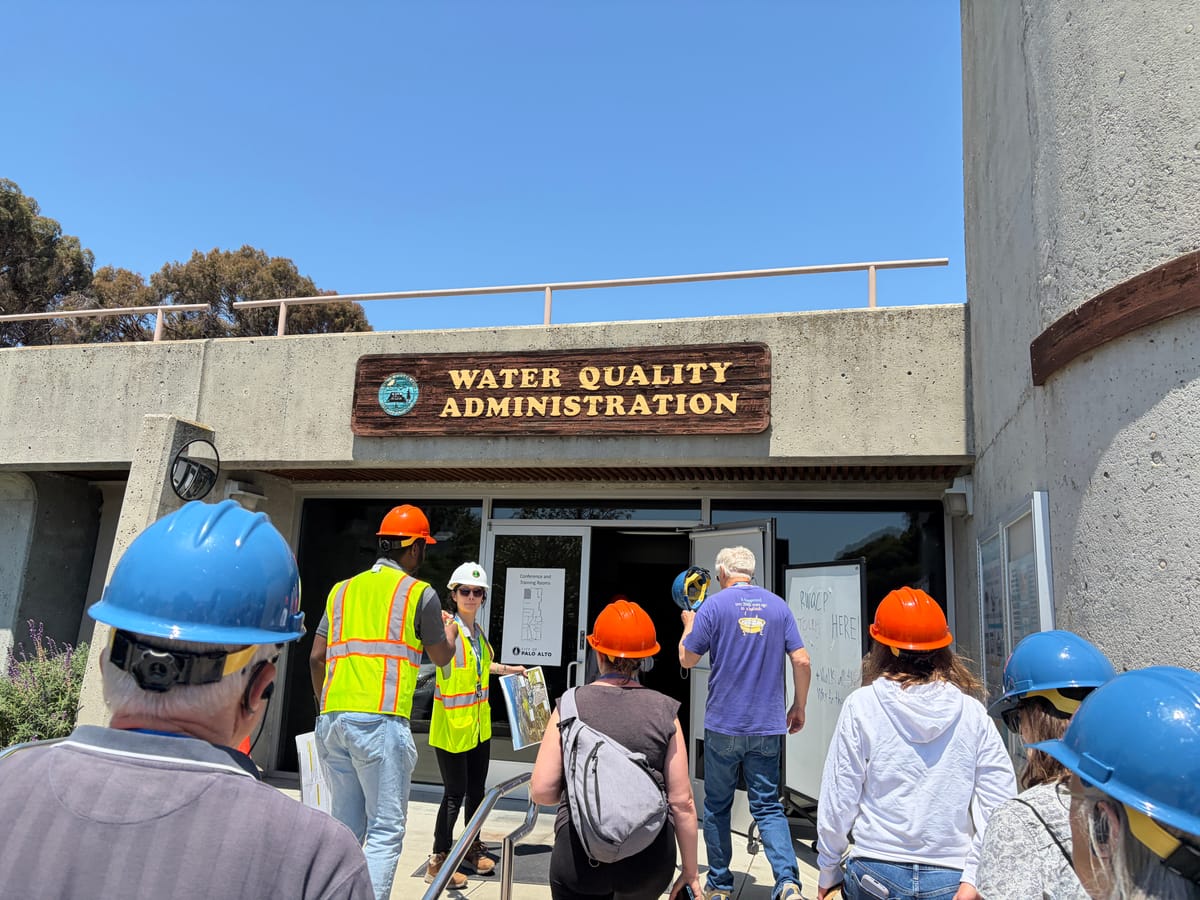
Today on June 15, I had the opportunity to tour the Palo Alto Regional Water Quality Control Plant, one of the largest wastewater treatment facilities in the Bay Area. The plant treats wastewater from Palo Alto and neighboring communities - including East Palo Alto - before returning highly treated water to the San Francisco Bay and producing recycled water for reuse.
The tour, led by 2 City of Palo Alto employees, provided a fascinating look at the science, engineering, and people behind a service most of us take for granted every day.
There are more tours this summer! You can sign up here: https://www.paloalto.gov/Events-Directory/Public-Works/Tour-the-RWQCP
The First Lesson: The Three Ps
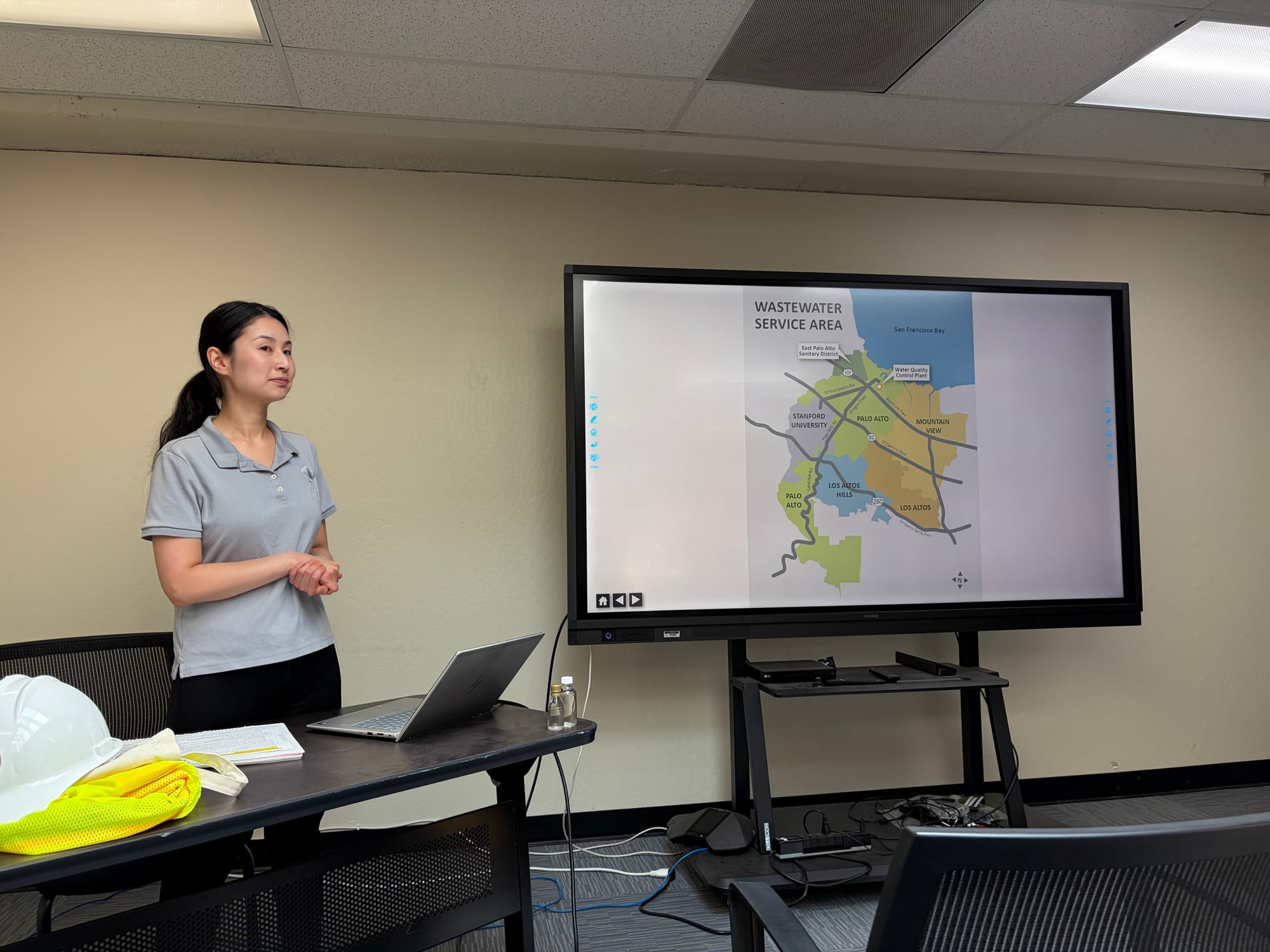

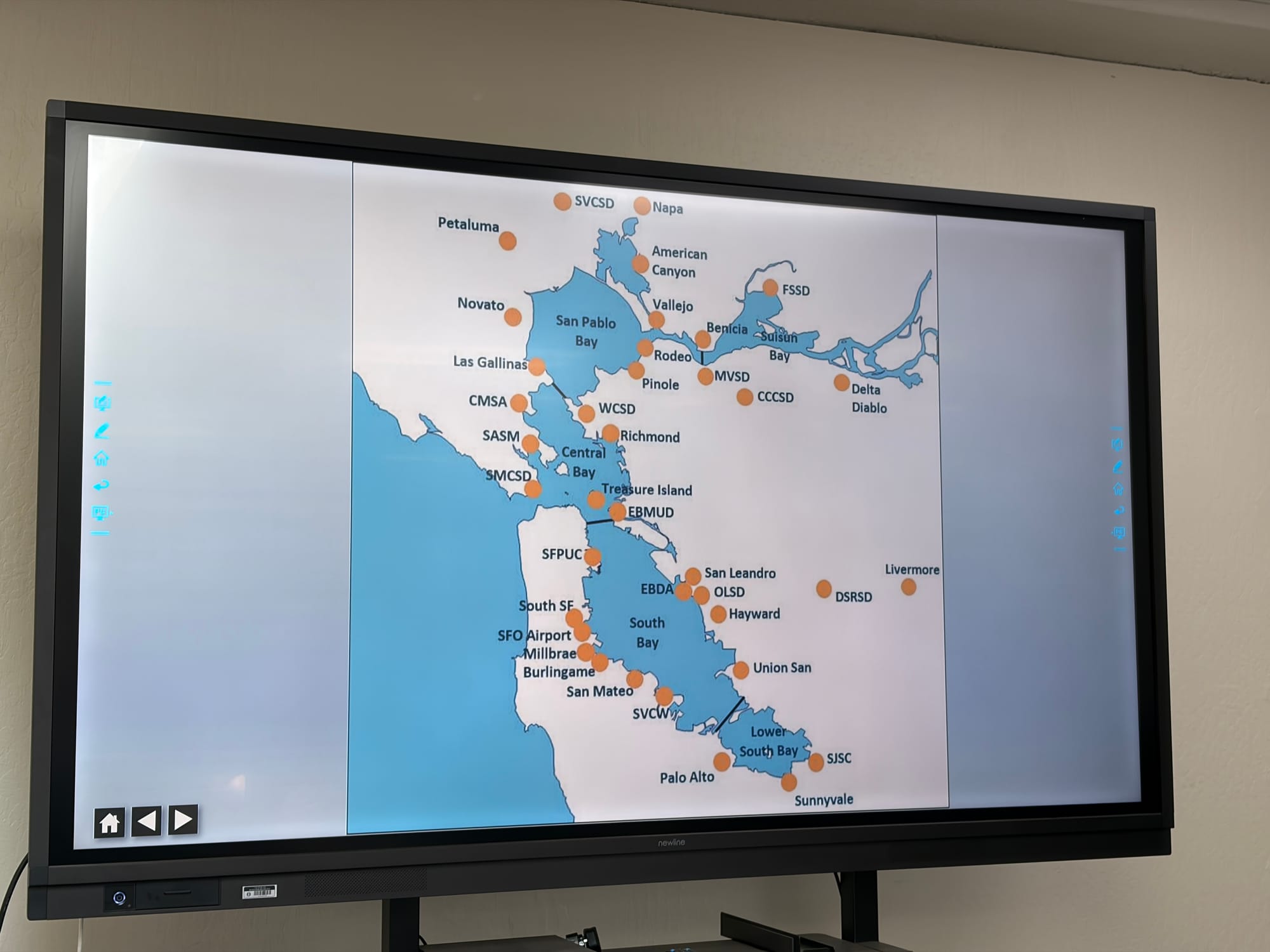
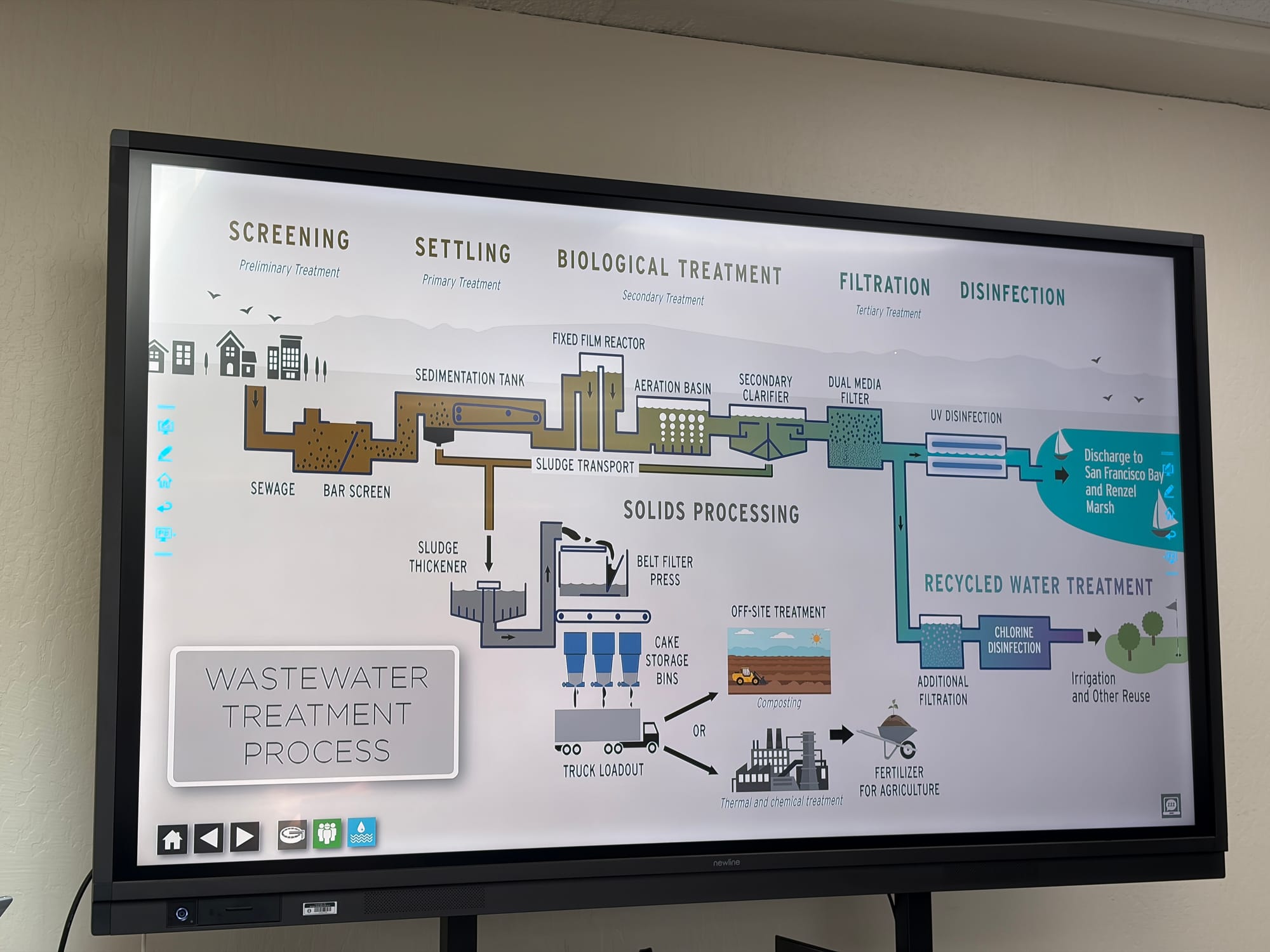
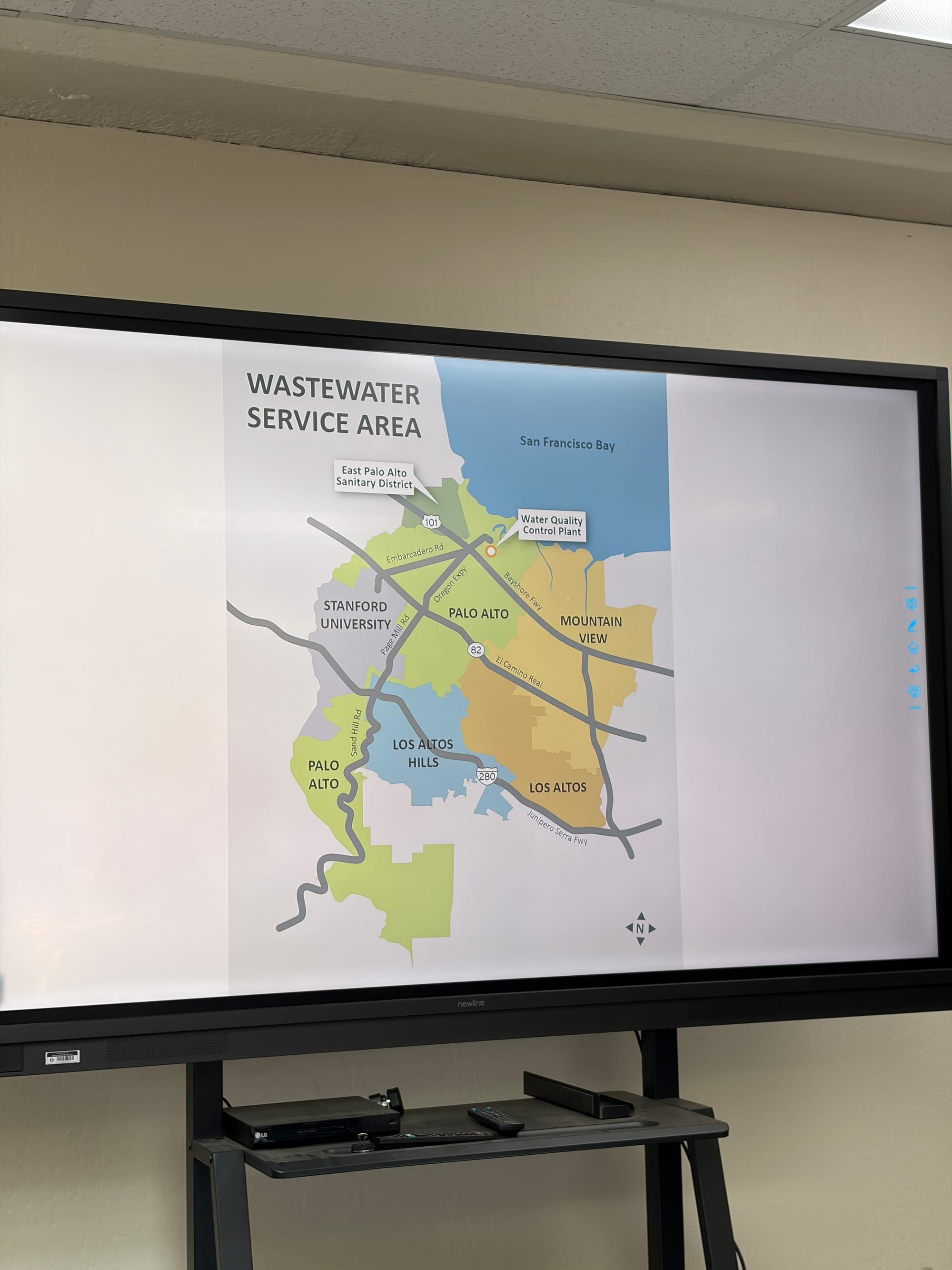
First, our tour group listened to a slide presentation about the context of the Palo Alto Regional Water Quality Control Plant.
One of the key messages from the tour was simple: only the “Three Ps” should be flushed down the toilet — pee, poop, and paper.
Despite marketing claims, so-called “flushable” wipes are a major problem for wastewater systems because they do not break down like toilet paper. They can clog pipes, damage equipment, and increase maintenance costs.
Removing Grit and Debris
Our first stop was the Headworks Building, where wastewater enters the treatment process. Large bar screens remove debris before the water moves through the plant.
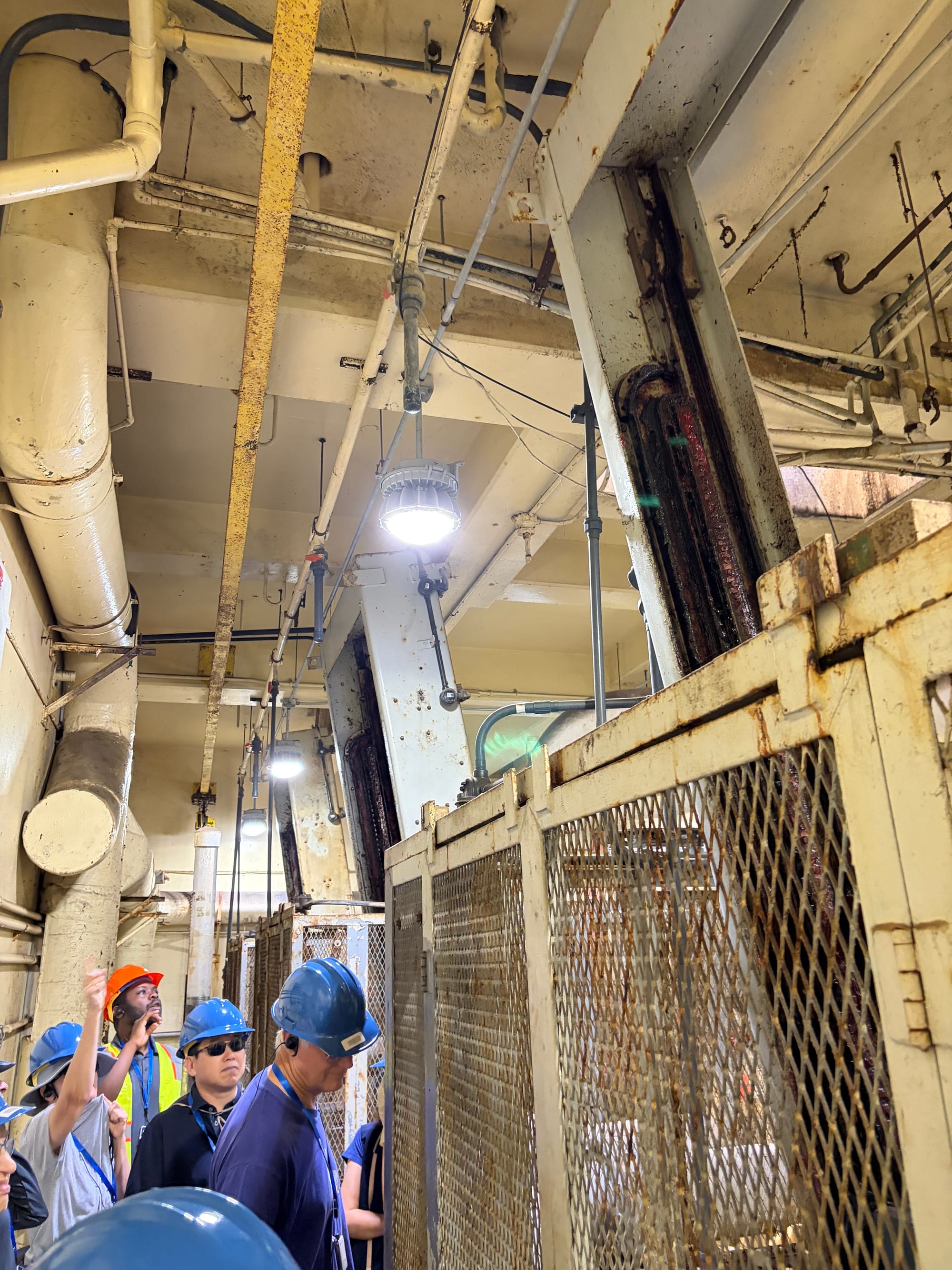
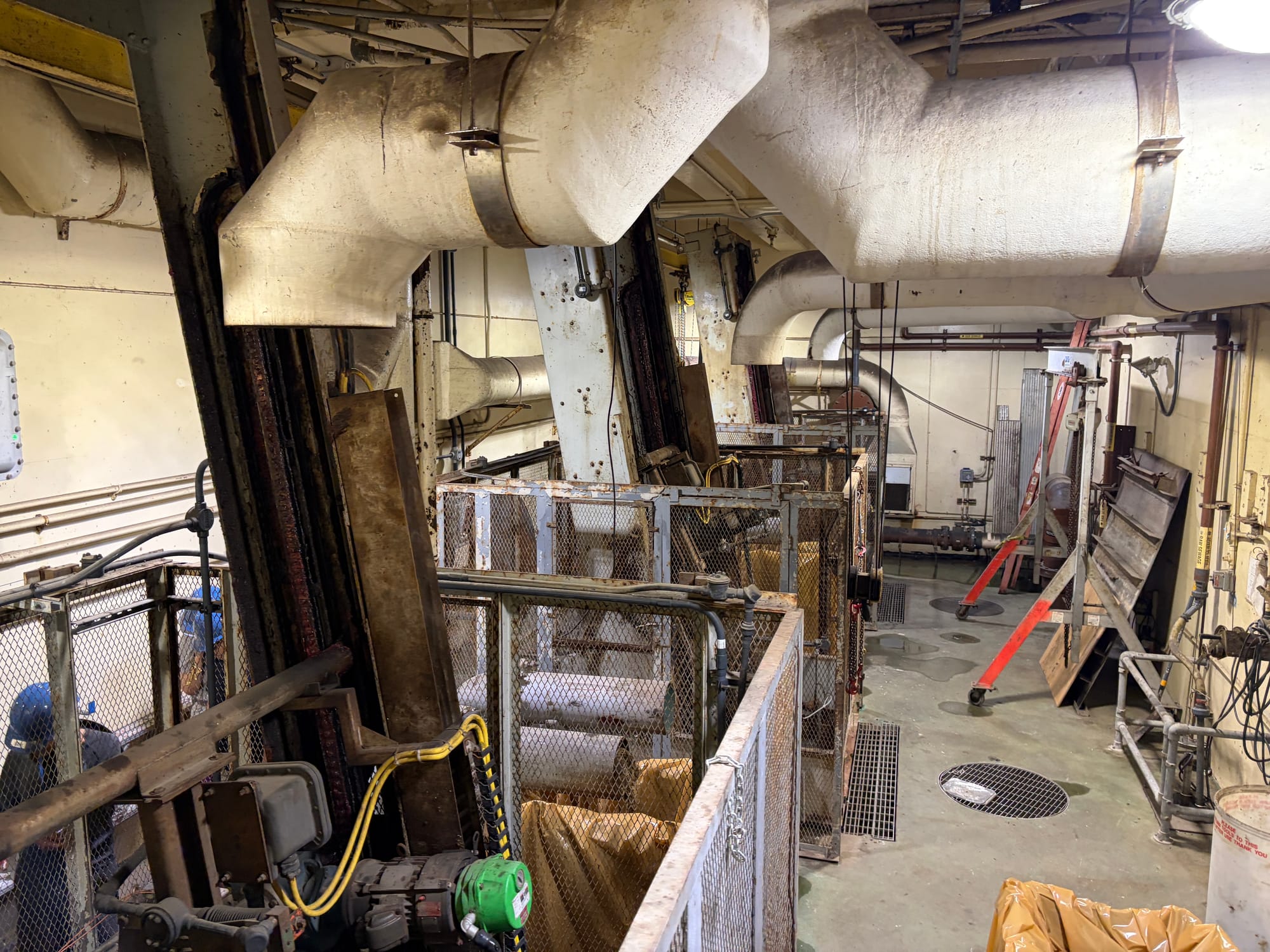
Next, we visited the grit removal building. Using cyclones and centrifuges, the plant separates heavier materials such as sand, gravel, and other inorganic particles from the wastewater.
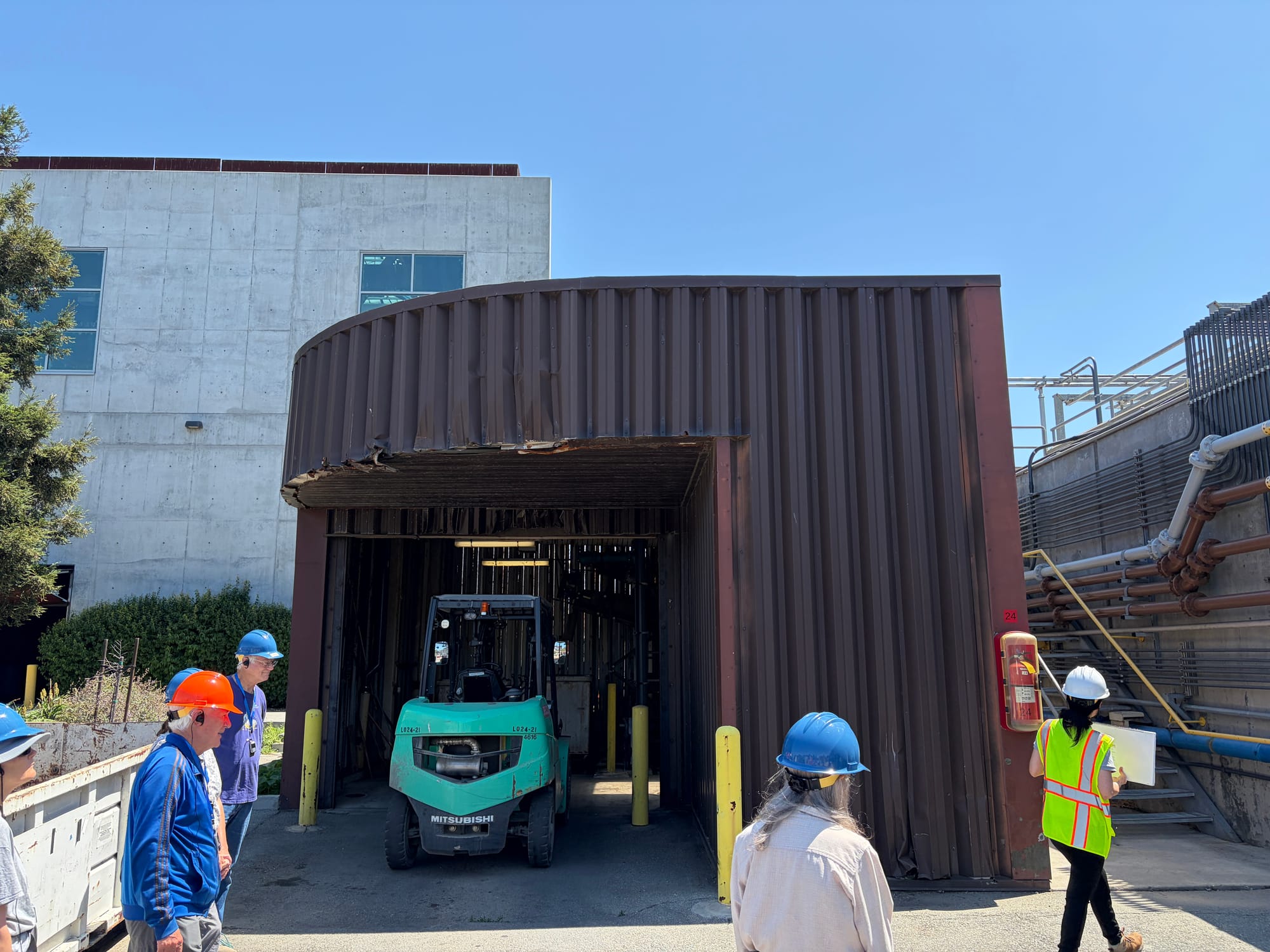
The system removes approximately one ton of grit every day. These materials are collected and transported for disposal.
Interestingly, some contaminants can still pass through the early stages of treatment. For example, many pharmaceuticals are not effectively removed during conventional wastewater treatment processes.
Letting Solids Settle
The wastewater then flows into primary sedimentation tanks, where water moves slowly enough for heavier solids to settle to the bottom.
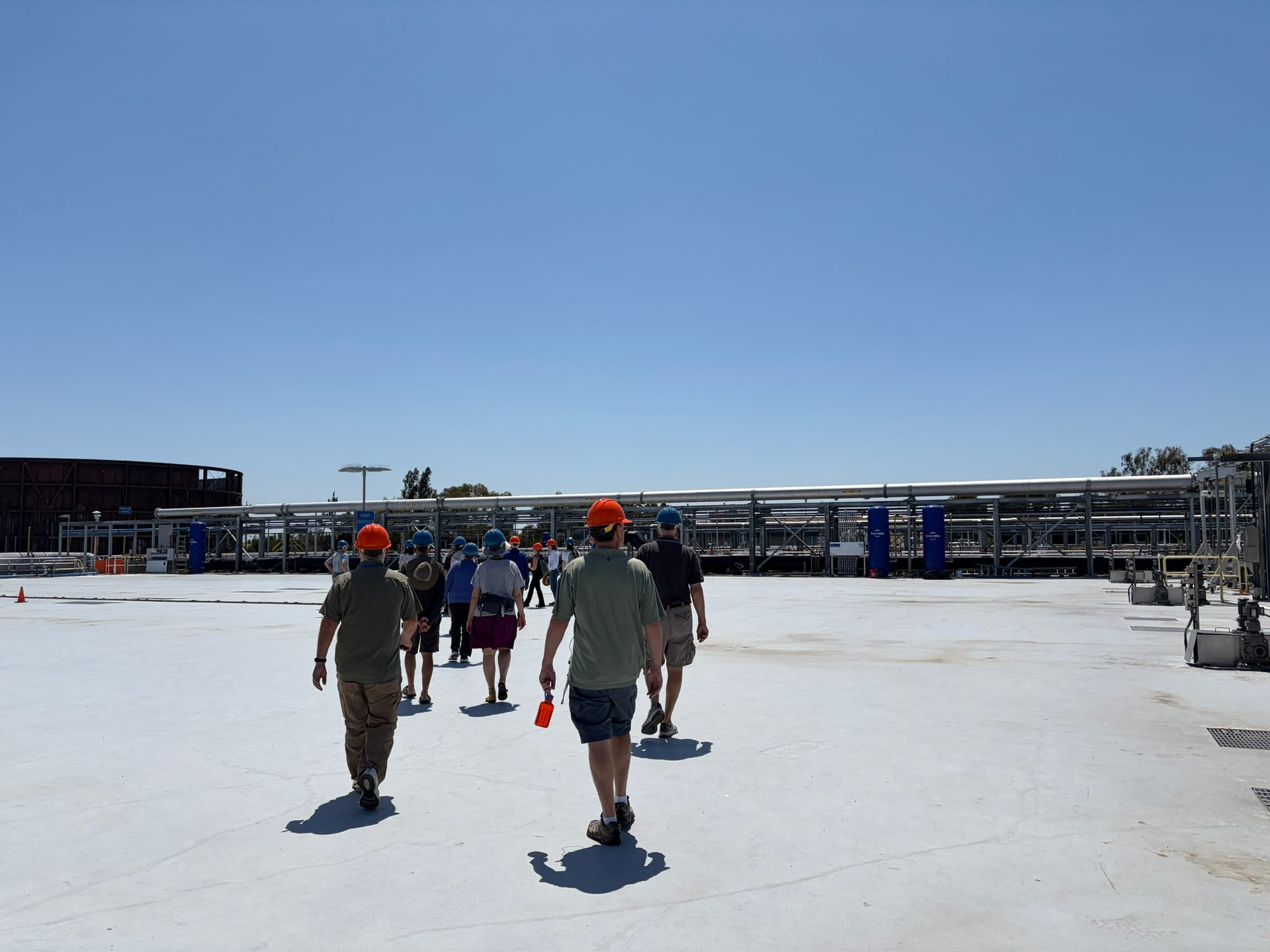
At the surface, fats, oils, and grease—commonly known as FOG—float to the top, forming what operators call “scum.” Both the settled solids and floating materials are removed for further processing.
Harnessing Microorganisms to Clean Water
One of the most interesting stops was the fixed-film reactor system. Water trickles downward through surfaces coated with biofilm, a living community of microorganisms including bacteria, algae, fungi, and other microbes.
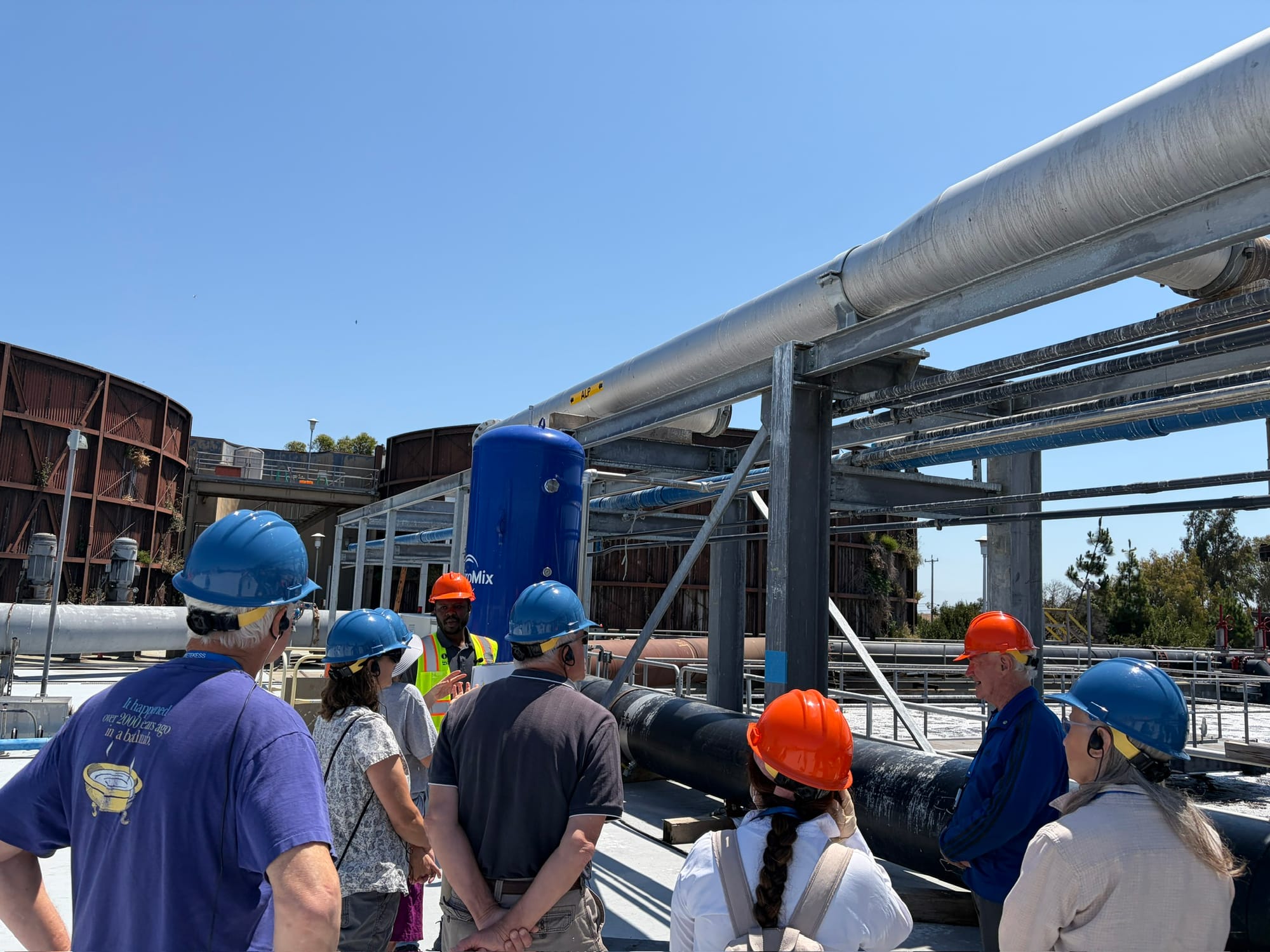
These organisms help break down pollutants and convert ammonium into nitrogen gas, removing excess nitrogen from the water.
The plant plans to eventually replace these reactors once its newest treatment facilities are fully operational.
Accelerating Nature
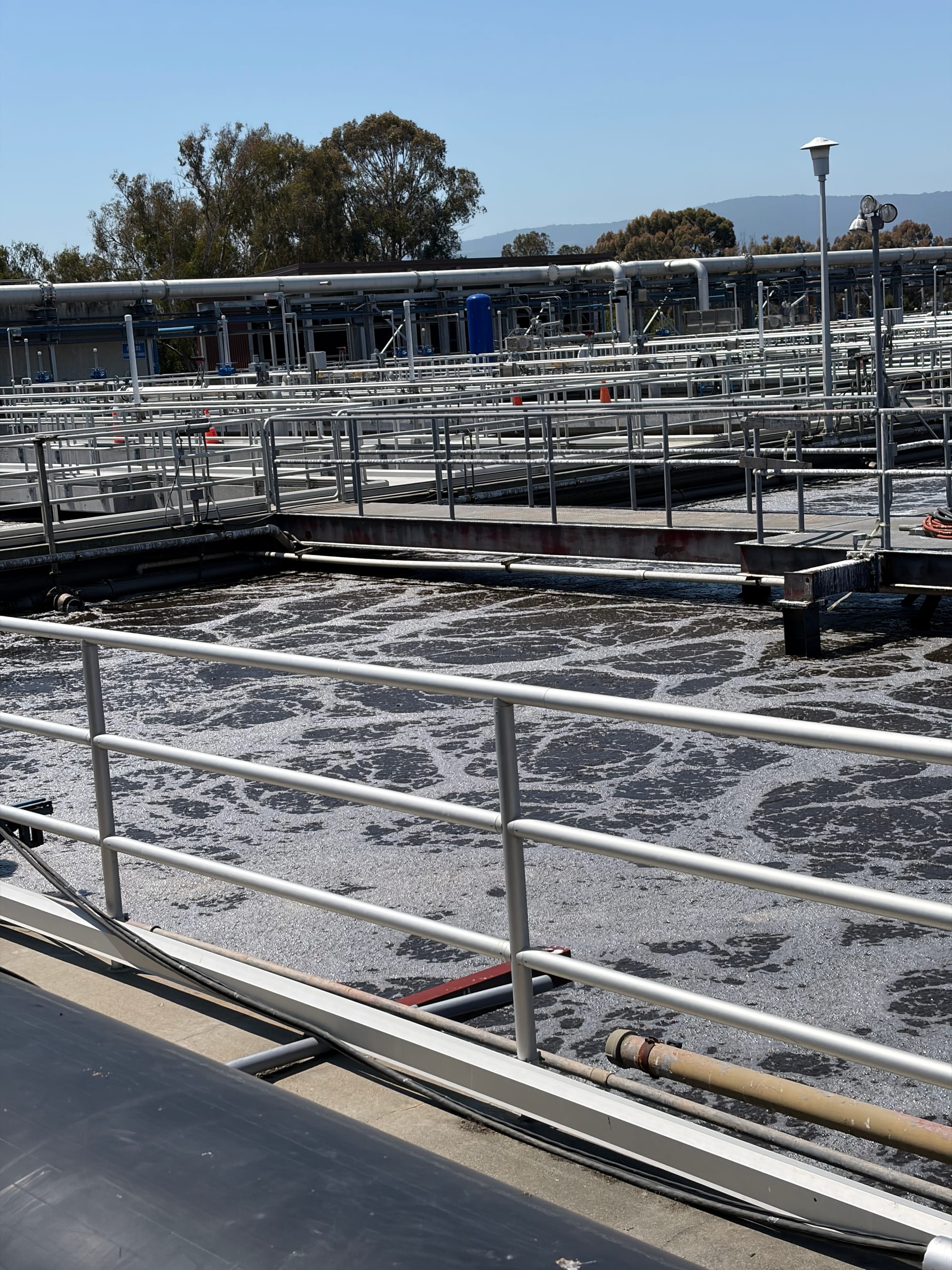
The secondary treatment process takes place in large aeration tanks. Air bubbles continuously supply oxygen while keeping the water mixed.
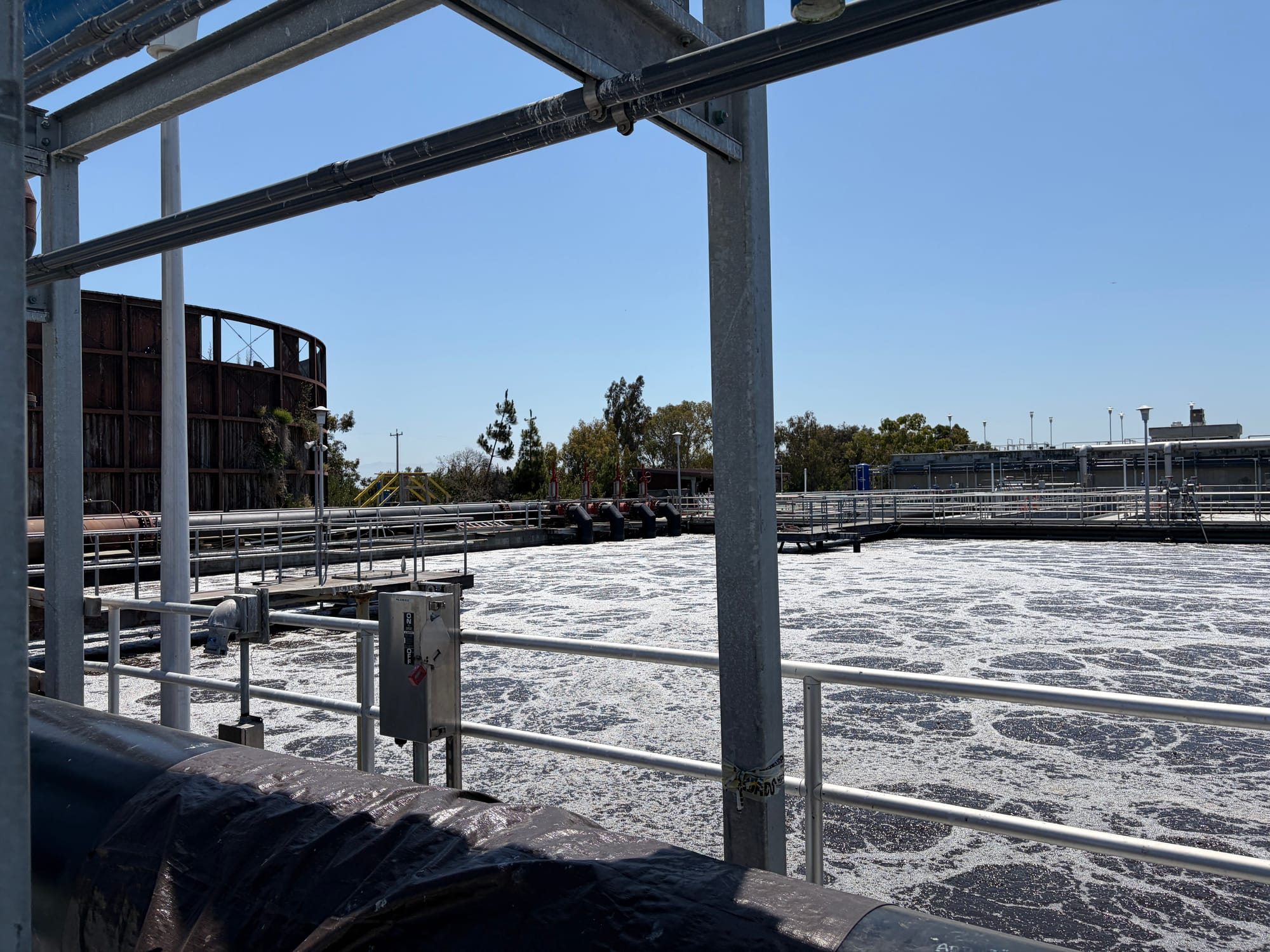
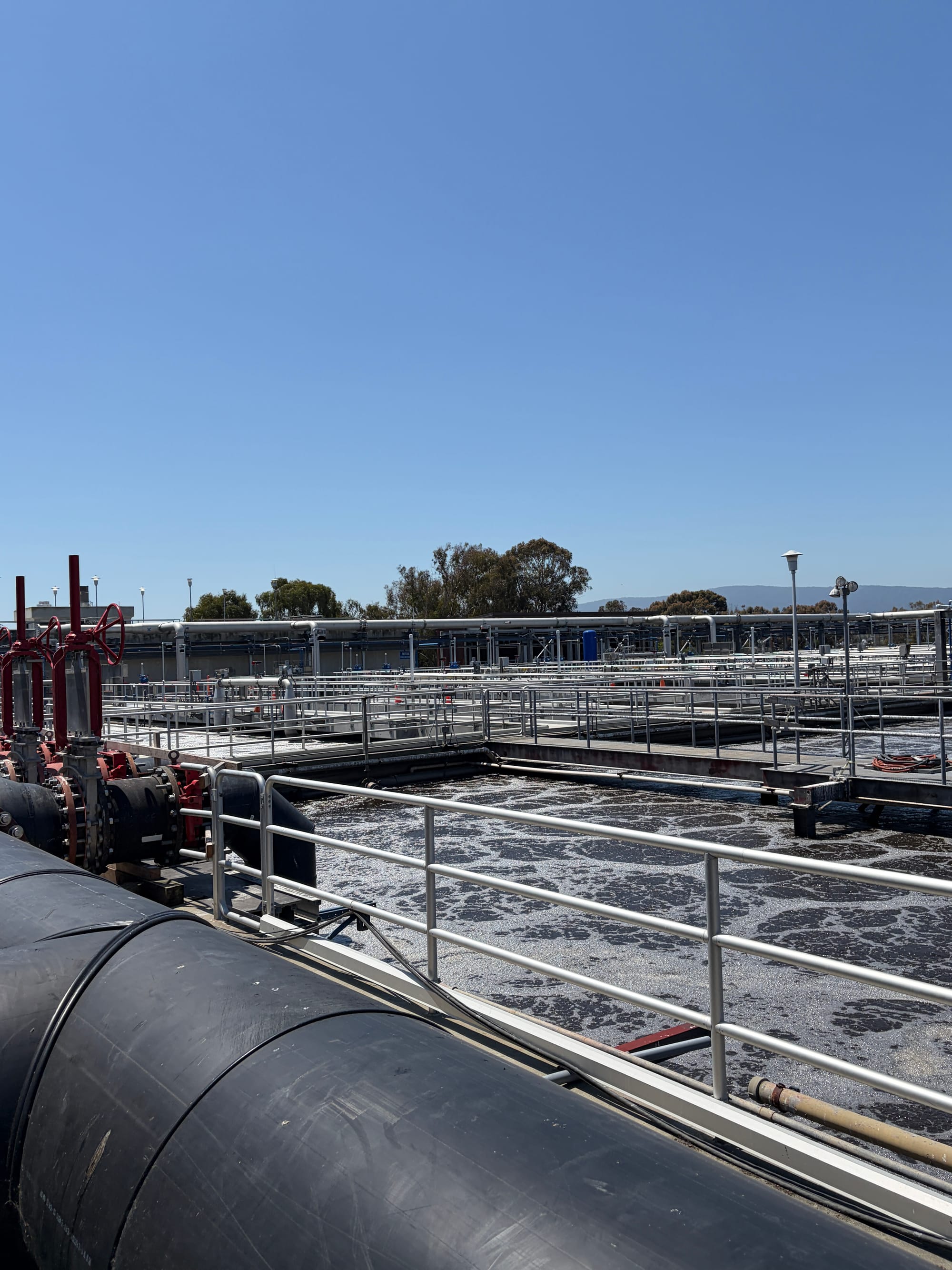
The tanks contain “activated sludge,” a community of microorganisms that consume organic material in the wastewater.
Our guide described the process as accelerating what happens naturally in rivers and streams. The plant can accomplish in about 24 hours what nature might take 30 days or longer to achieve.
Major Upgrades for the Future
One of the most significant projects underway is a $193 million upgrade—the largest capital investment in the plant’s history.
The new system includes a series of anaerobic and aerobic treatment tanks designed to improve nutrient removal through nitrification and denitrification processes. These processes convert nitrogen compounds into nitrogen gas, which can safely return to the atmosphere.
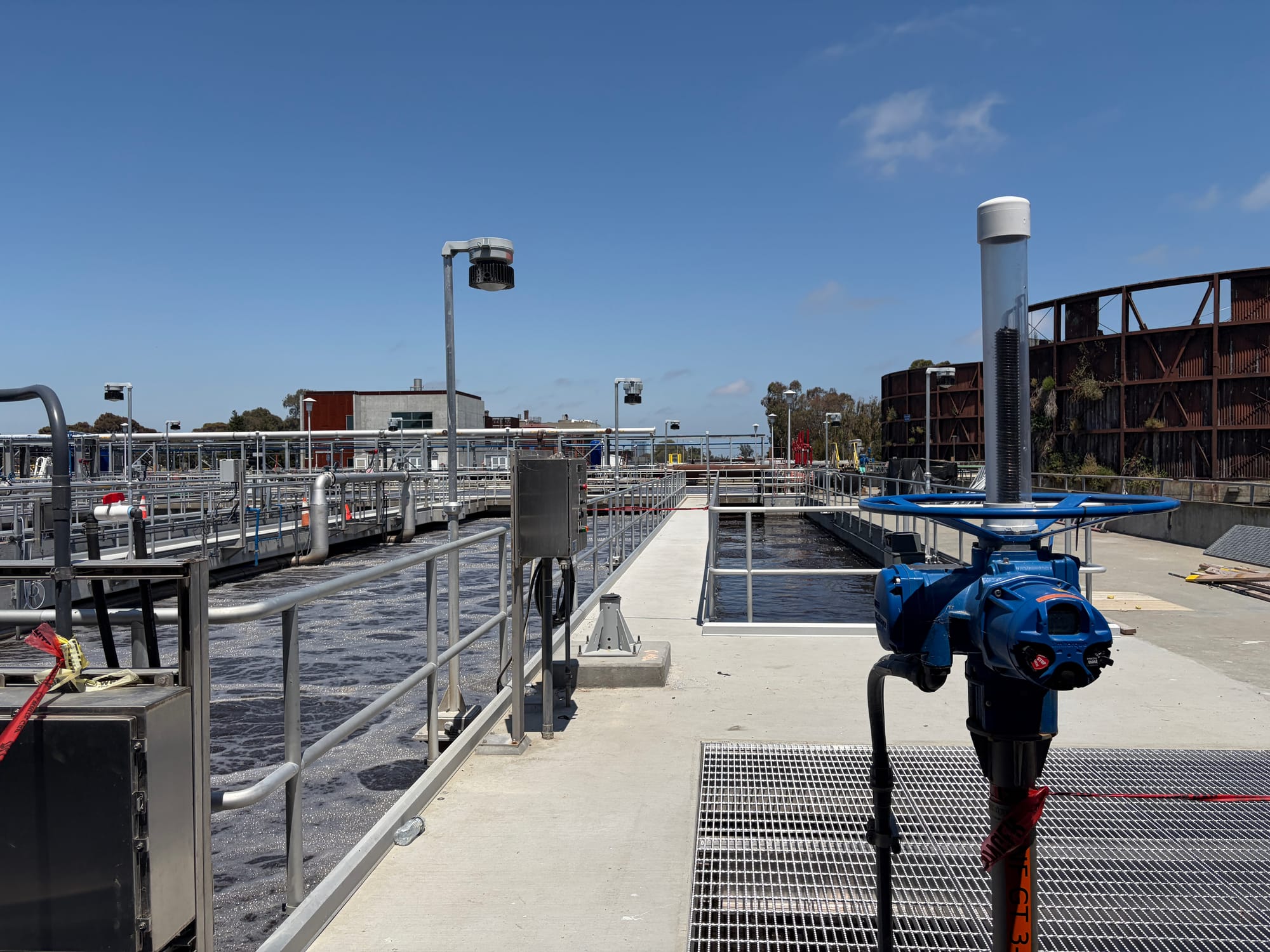
Construction began approximately two years ago, and some of the new tanks are already operating while others remain under construction.
Once the entire project is completed, older treatment systems such as the fixed-film reactors can be retired.
The upgrades will also improve the quality of recycled water by reducing salt content. This is important because elevated salt levels can negatively affect plants and trees, including redwoods, when recycled water is used for irrigation.
Clarification and Filtration
After biological treatment, water enters clarification tanks where microorganisms settle to the bottom.
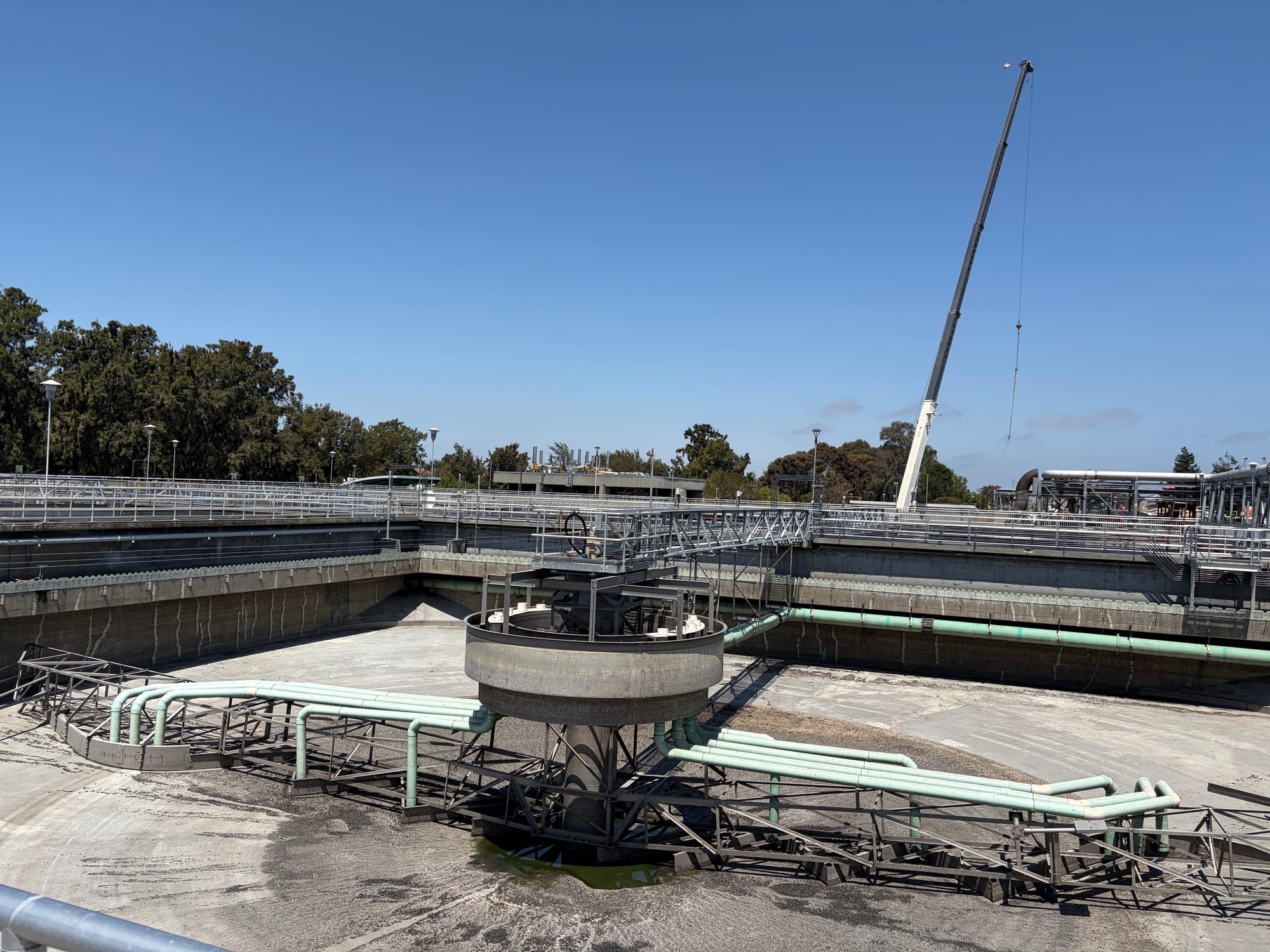
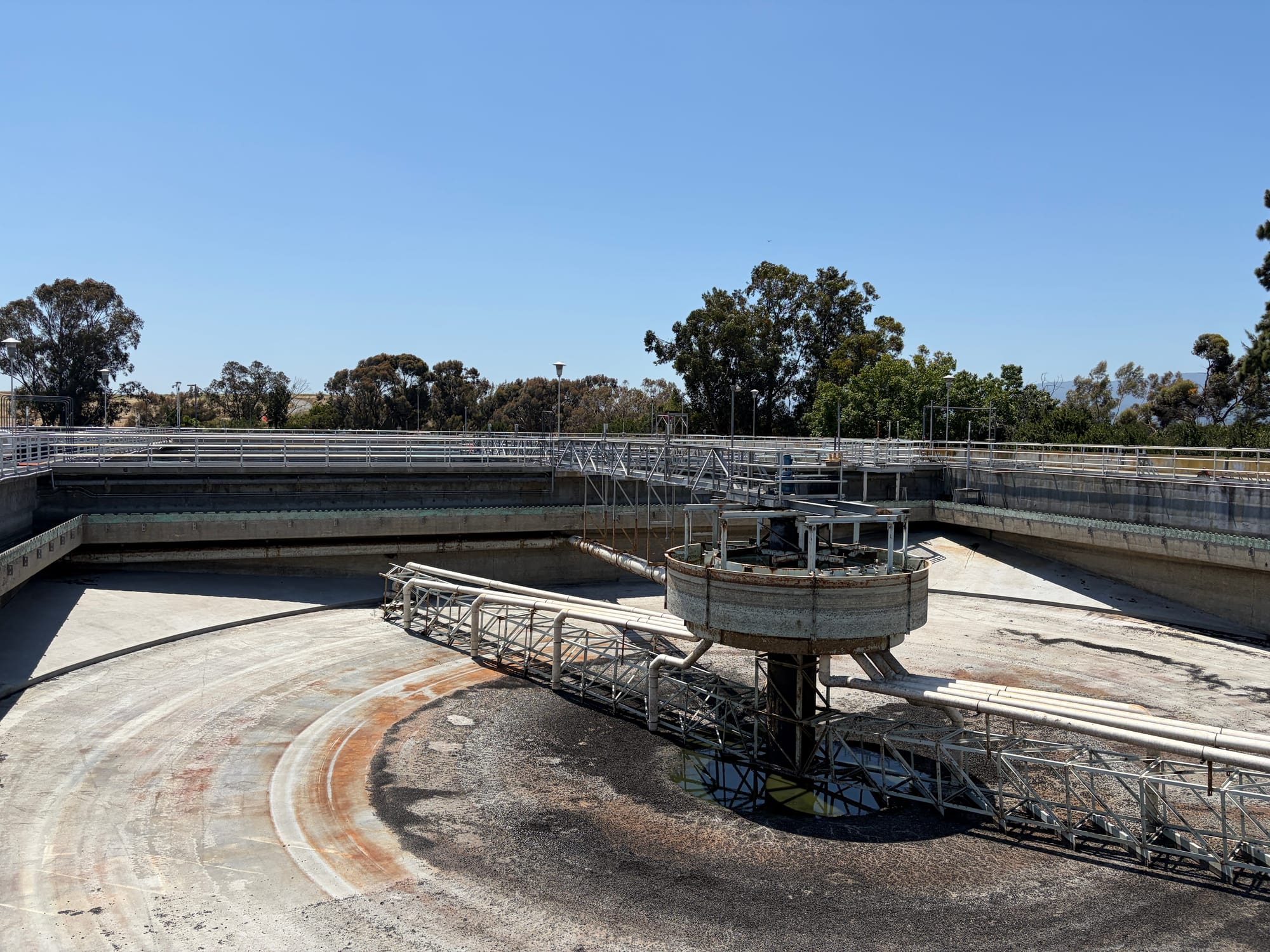
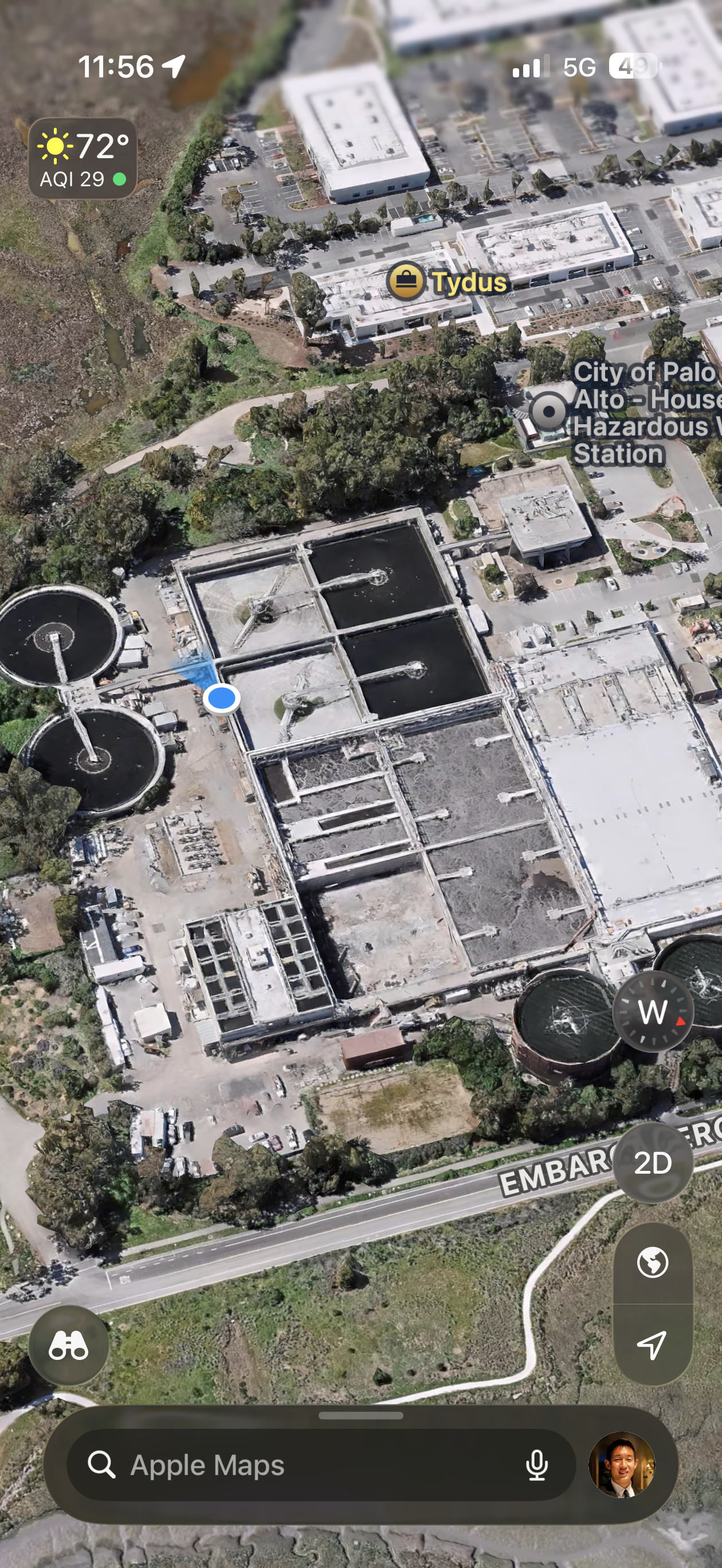
Some of this biomass is returned to the aeration tanks to continue the treatment process. The remainder is sent for sludge processing.
The water then moves through twelve dual-media tertiary filters containing materials such as sand, gravel, and filtration media that remove smaller particles. Similar filtration processes are commonly used in drinking water treatment facilities.
The Control Center and Laboratory
The plant’s operations are monitored through its SCADA (Supervisory Control and Data Acquisition) system, which serves as the operational hub of the facility. Operators use dashboards and real-time monitoring tools to manage treatment processes throughout the plant.
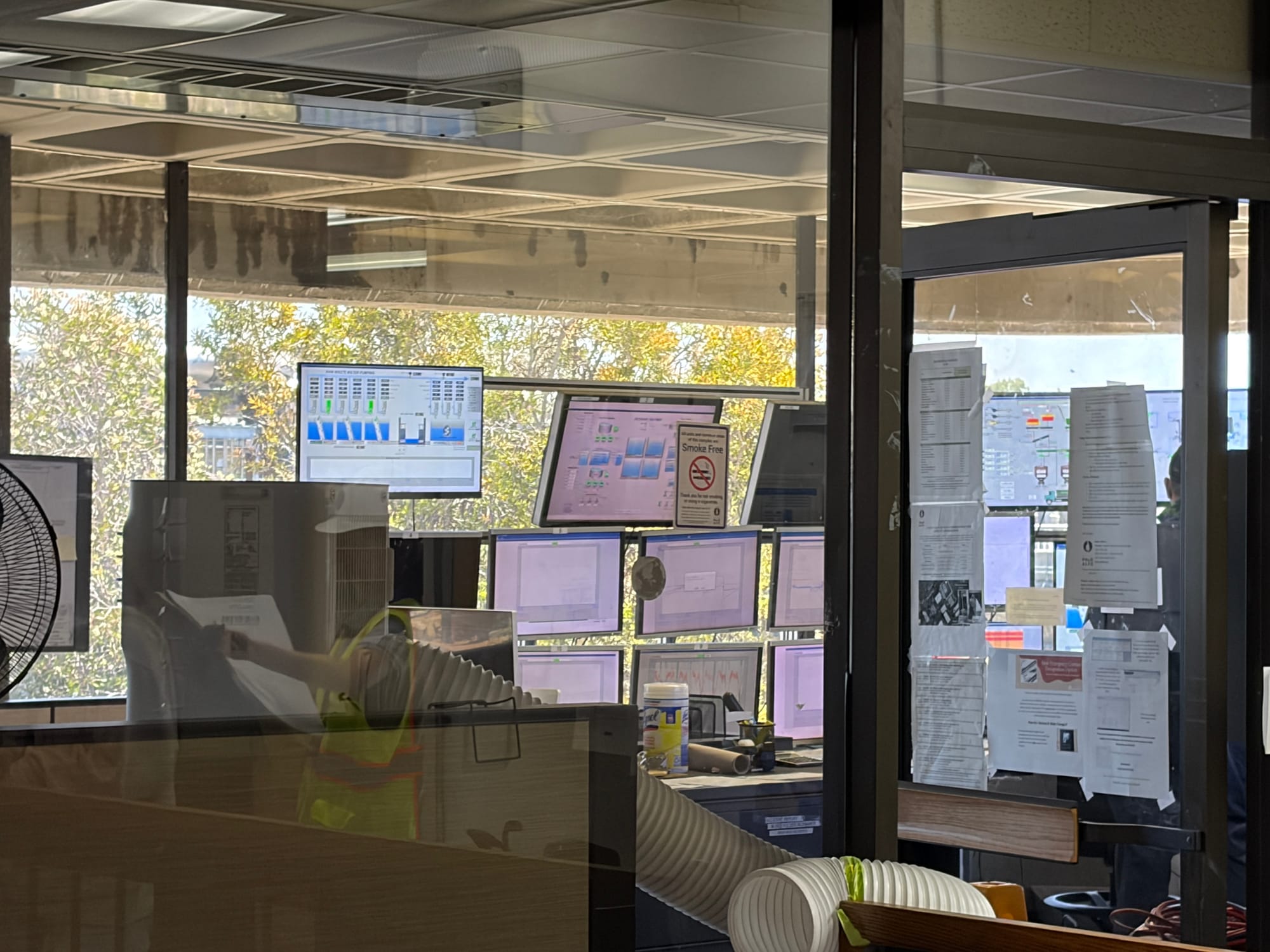
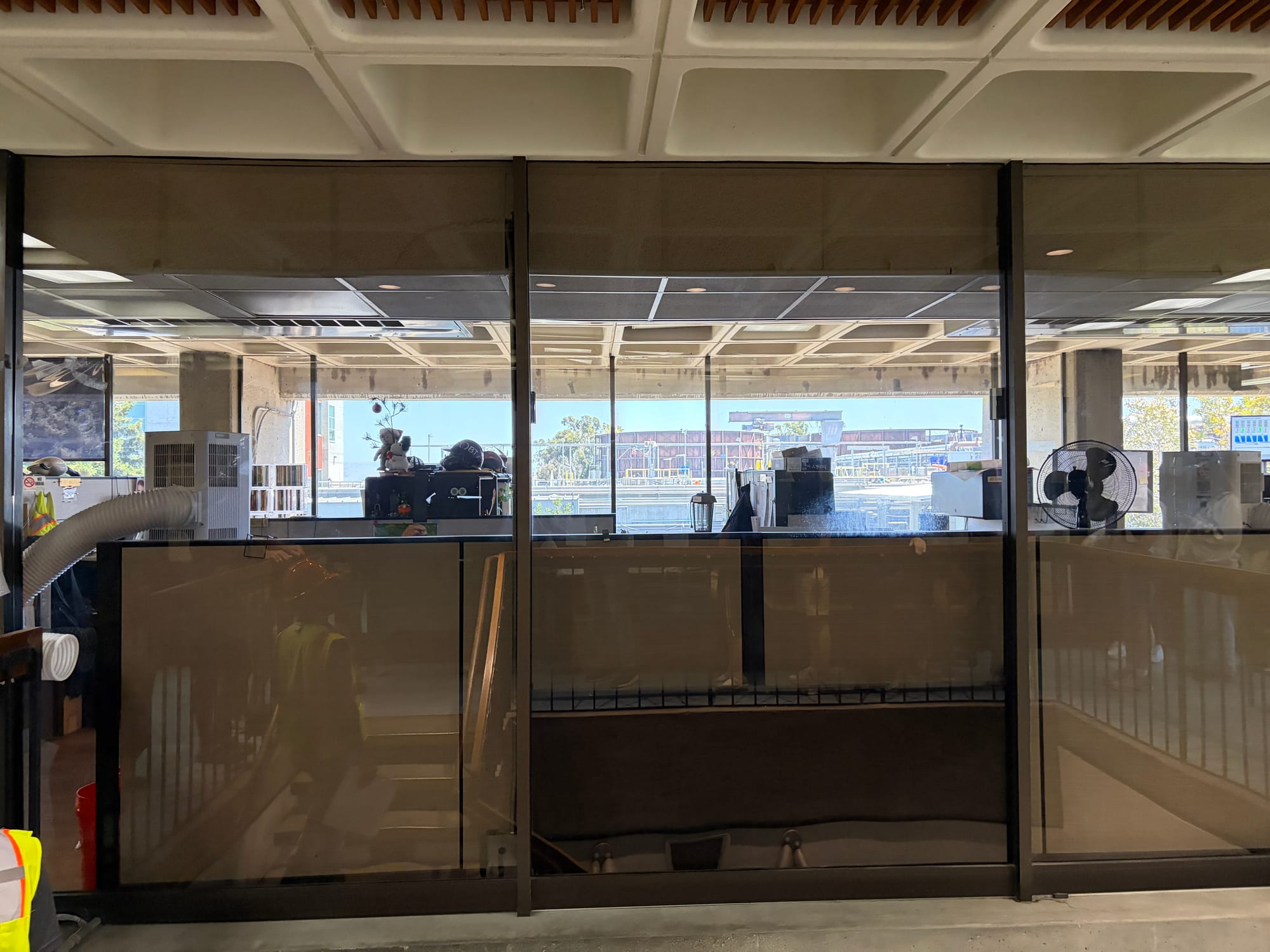
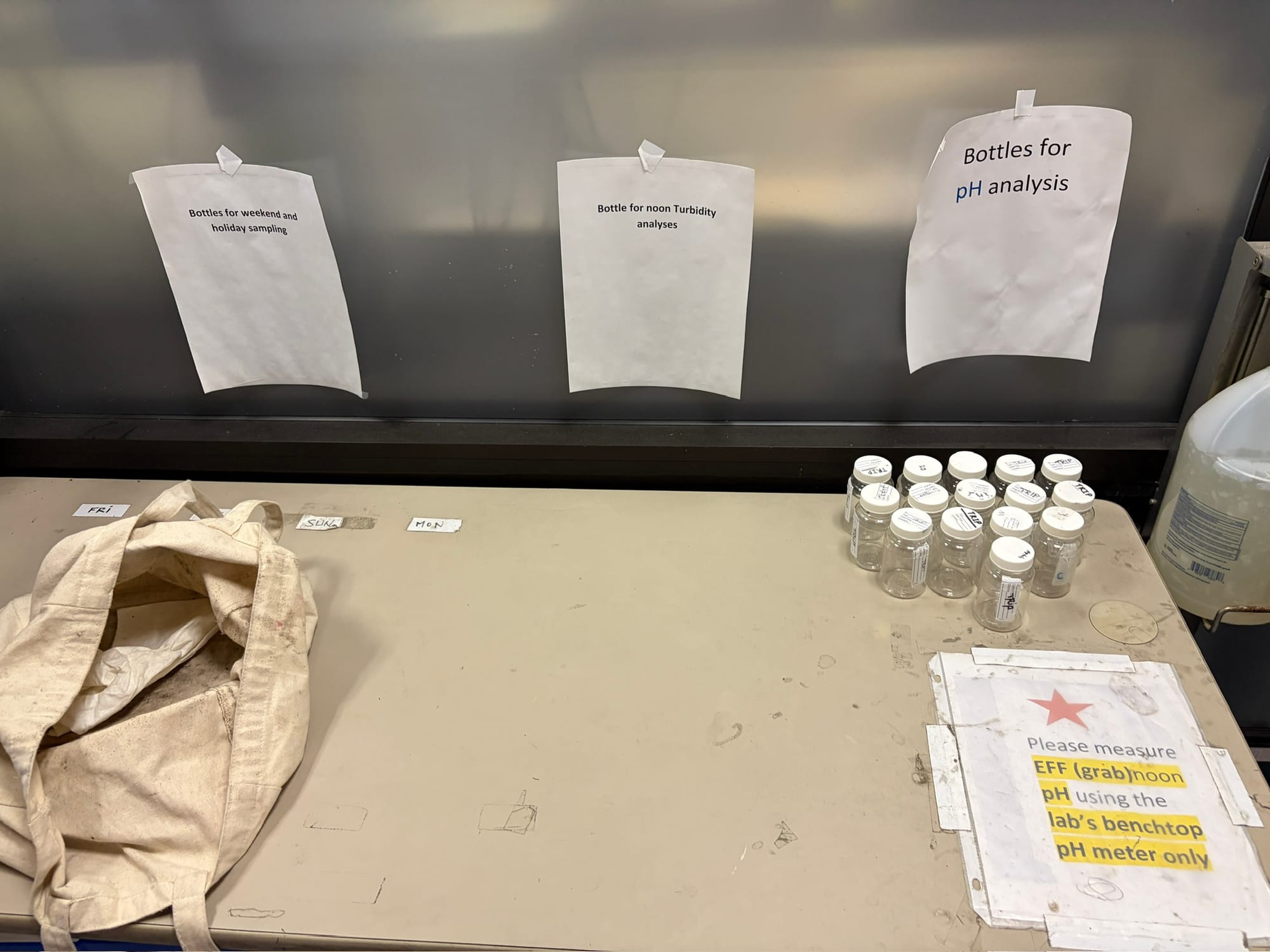
An onsite laboratory continuously tests water quality to ensure compliance with environmental standards.
The facility employs approximately 50 to 60 people who work around the clock to keep the system running safely and efficiently. At any point, there may be around 15 employees.
A Better Use for Biosolids
One notable environmental improvement involves how biosolids are managed.
Historically, sludge was incinerated, generating air pollution and greenhouse gas emissions. Since 2019, the plant has shifted toward beneficial reuse, converting biosolids into fertilizer products instead.
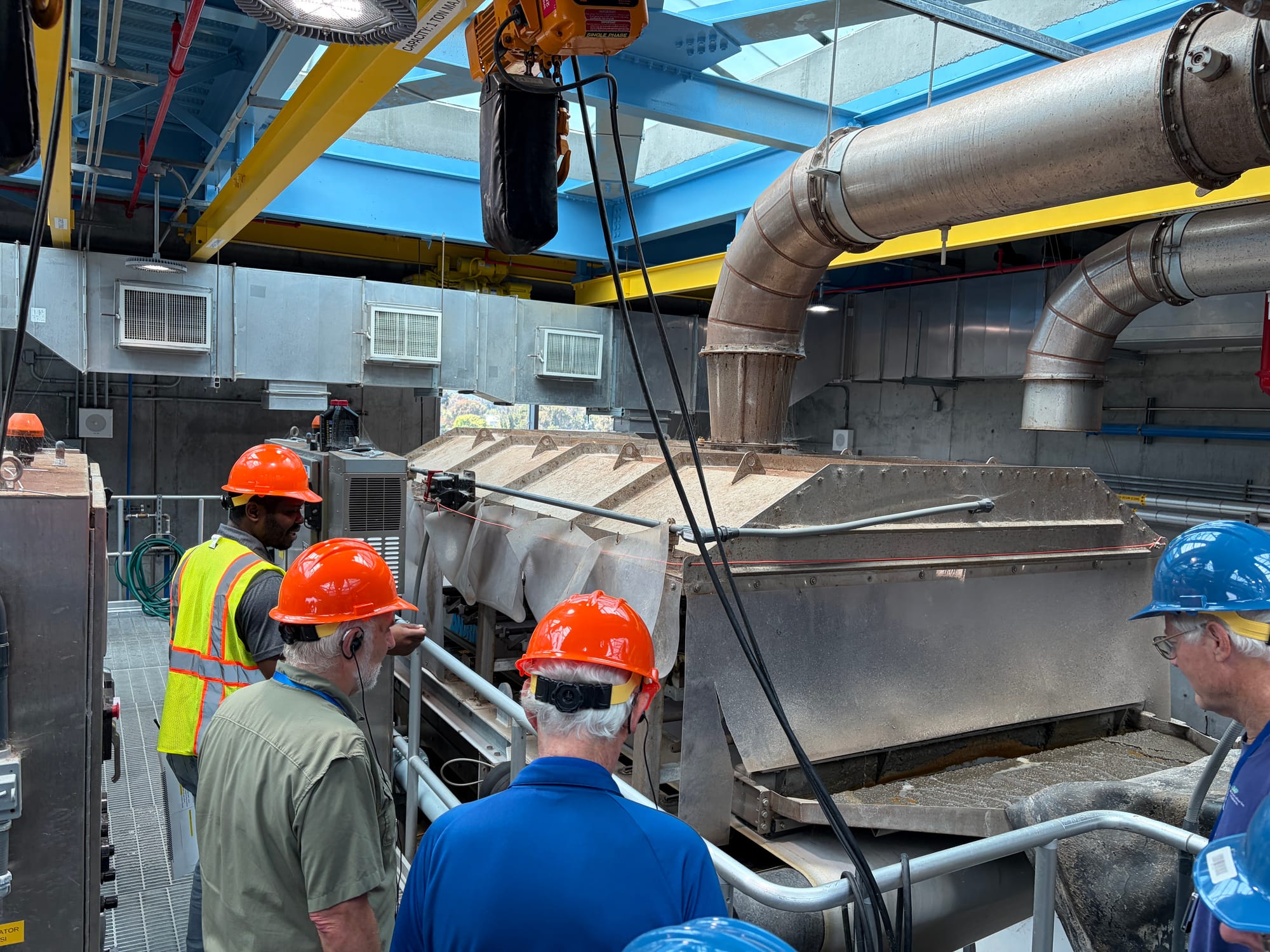
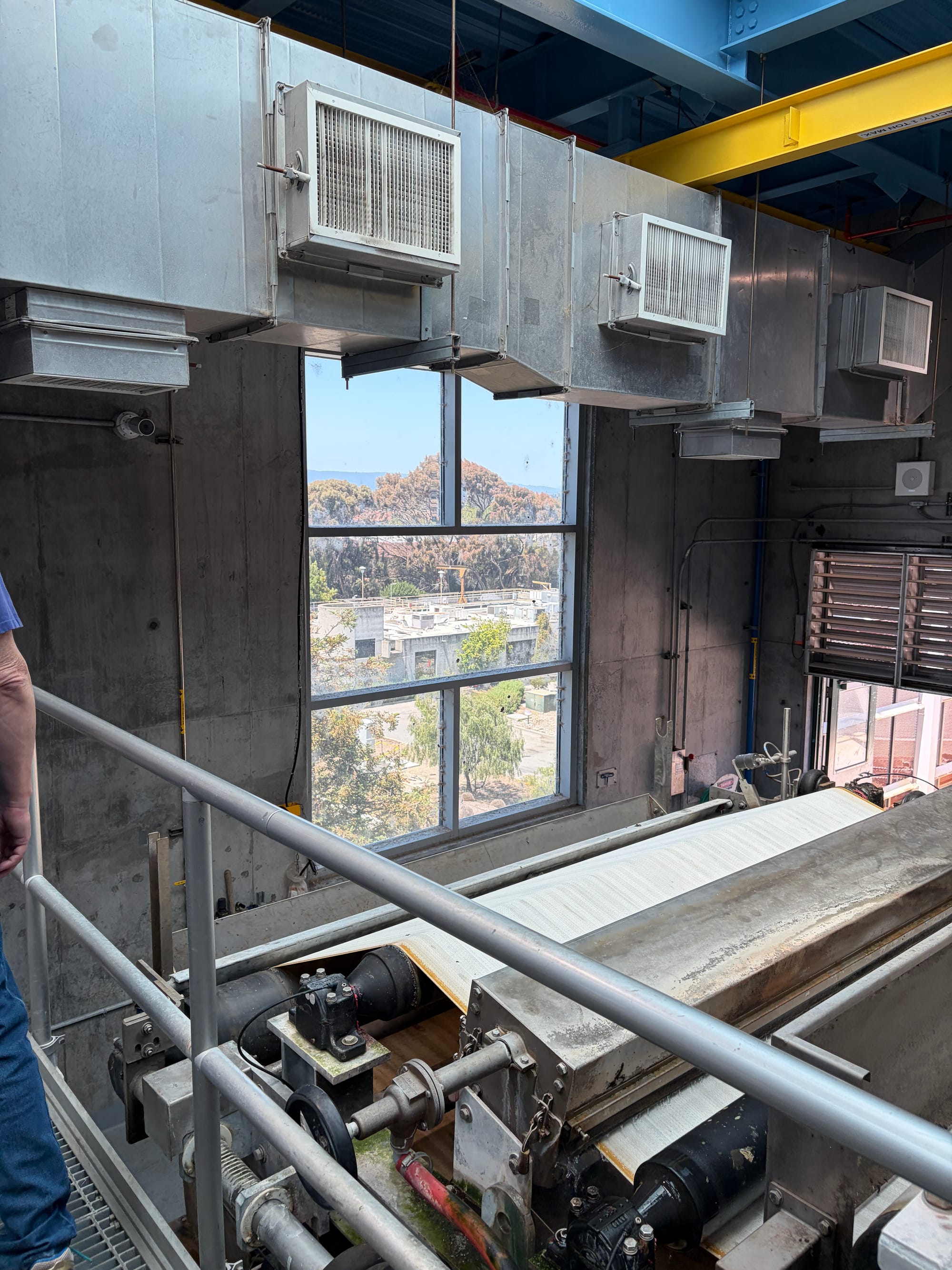
This machine removes water from the sludge, reducing the liquid content of the biosolids.
The resulting biosolids are transported to agricultural regions, including Solano County and the Central Valley.
What the Plant Can—and Cannot—Do
The facility currently treats about 25 million gallons of wastewater per day and produces roughly 2 million gallons per day of recycled water.
During major winter storms, flows can reach as much as 80 million gallons per day. Under those conditions, operators may rely on portions of the treatment process designed for high-flow events.
One important takeaway was that the plant is not designed to remove everything. For example, it does not use reverse osmosis and is not specifically designed to remove microplastics. Its mission is to treat wastewater to a level that protects public health and the environment before discharge to the Bay.
The Final Step: UV Disinfection
Before leaving the plant, we learned about the final stage of treatment - ultraviolet (UV) disinfection - but were not able to access it due to construction.
Water flows through UV channels where microorganisms are exposed to ultraviolet light. The UV radiation prevents bacteria and other microbes from reproducing, providing an effective form of disinfection without adding chemicals.
Why Infrastructure Matters
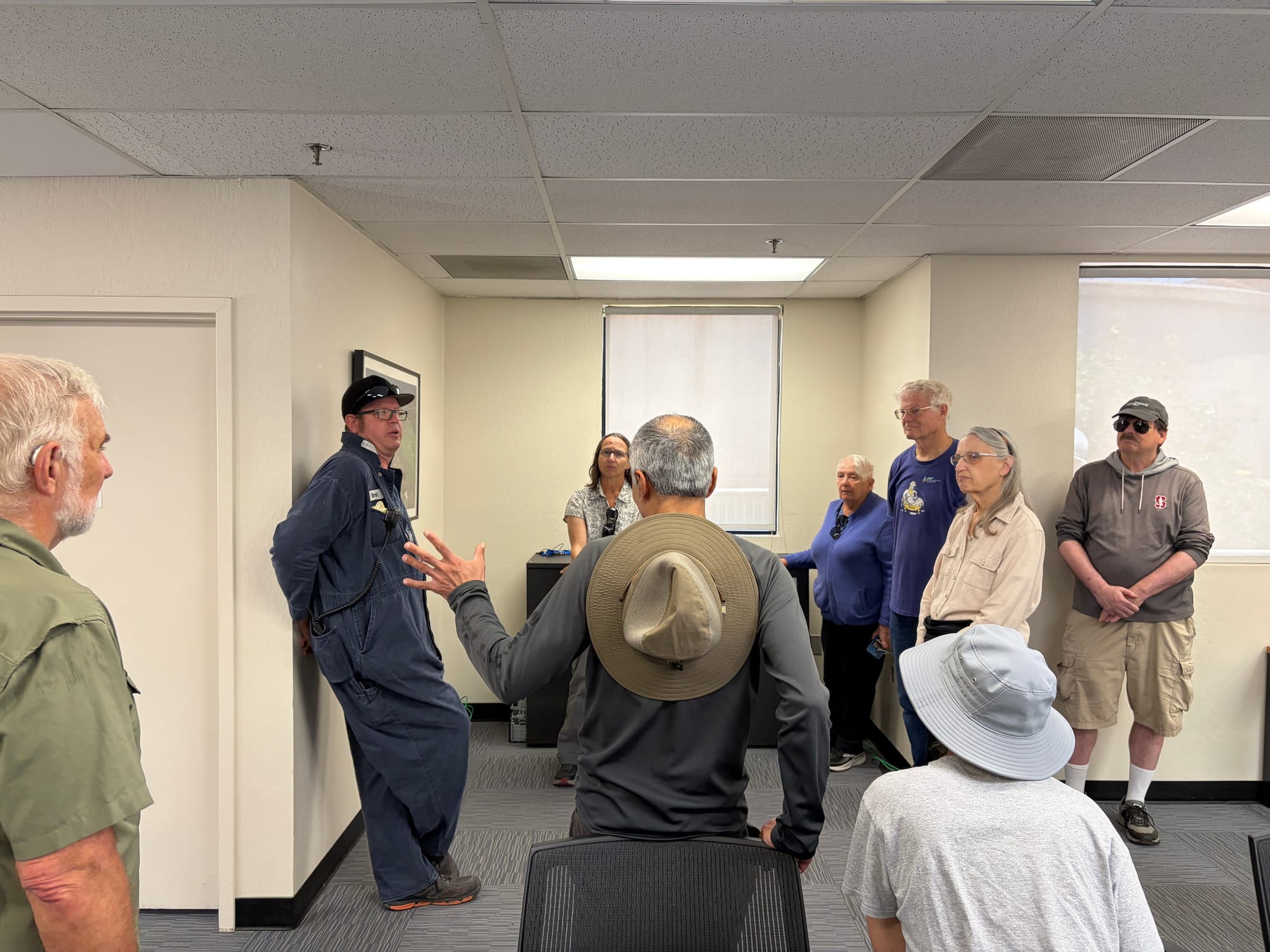
The tour was a reminder that wastewater treatment is one of society’s most important but least visible public services. Every day, millions of gallons of wastewater are collected, cleaned, monitored, and safely returned to the environment through a combination of engineering, biology, and dedicated public servants.
As communities throughout California face challenges related to water quality, water reuse, climate resilience, and environmental protection, investments like Palo Alto’s $193 million upgrade demonstrate the importance of maintaining and modernizing the infrastructure that protects both public health and the San Francisco Bay.