Reforming East Palo Alto's Building Department

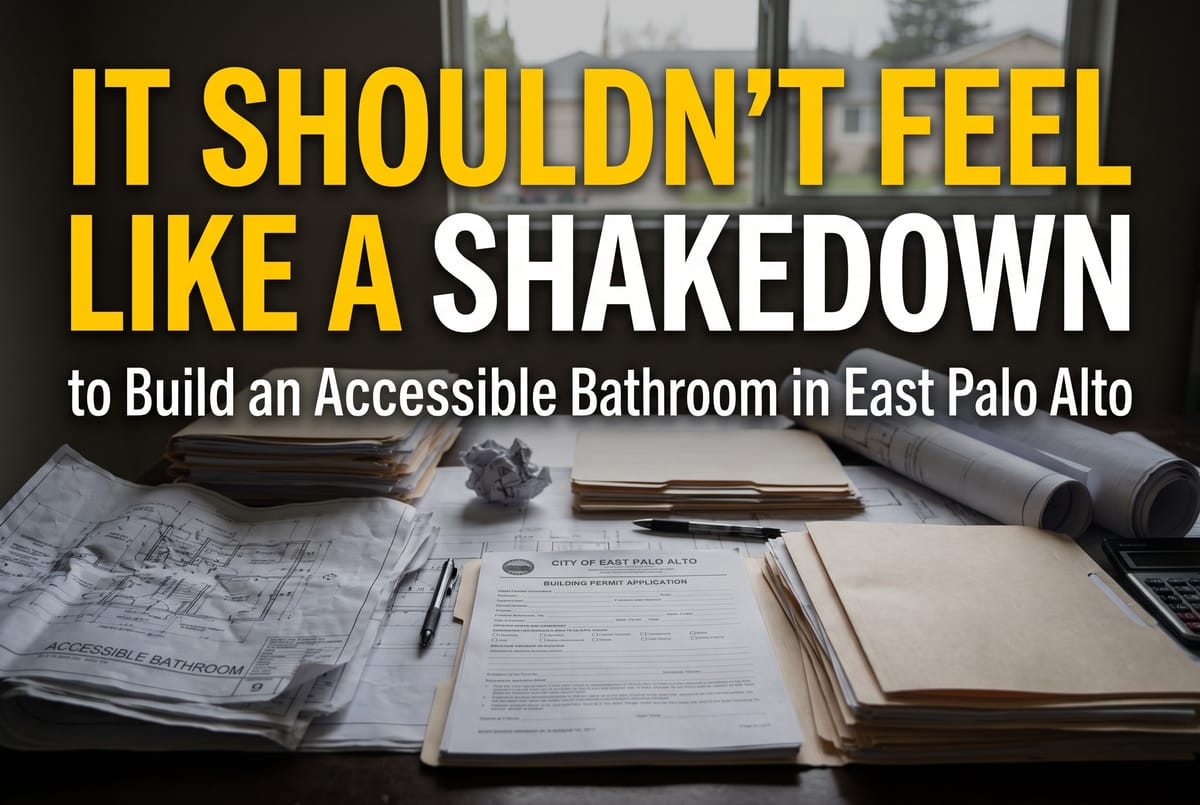
I sat down today with Tim, an East Palo Alto resident who is at his wits' end trying to do something completely reasonable: legally add a wheelchair-accessible bathroom to his home.
Both Tim and his wife are amputees—in fact, they met at a prosthetics clinic. Tim is a teacher, and his wife works as an administrator at a local mental health clinic. They are dedicated public servants who give back to our community every day, not wealthy developers with deep pockets. Like anyone who uses a wheelchair, they simply want a bathroom in their own home that meets their basic daily needs.
In a well-run city, this would be one of the easiest, most straightforward permits on the books. Not in East Palo Alto.
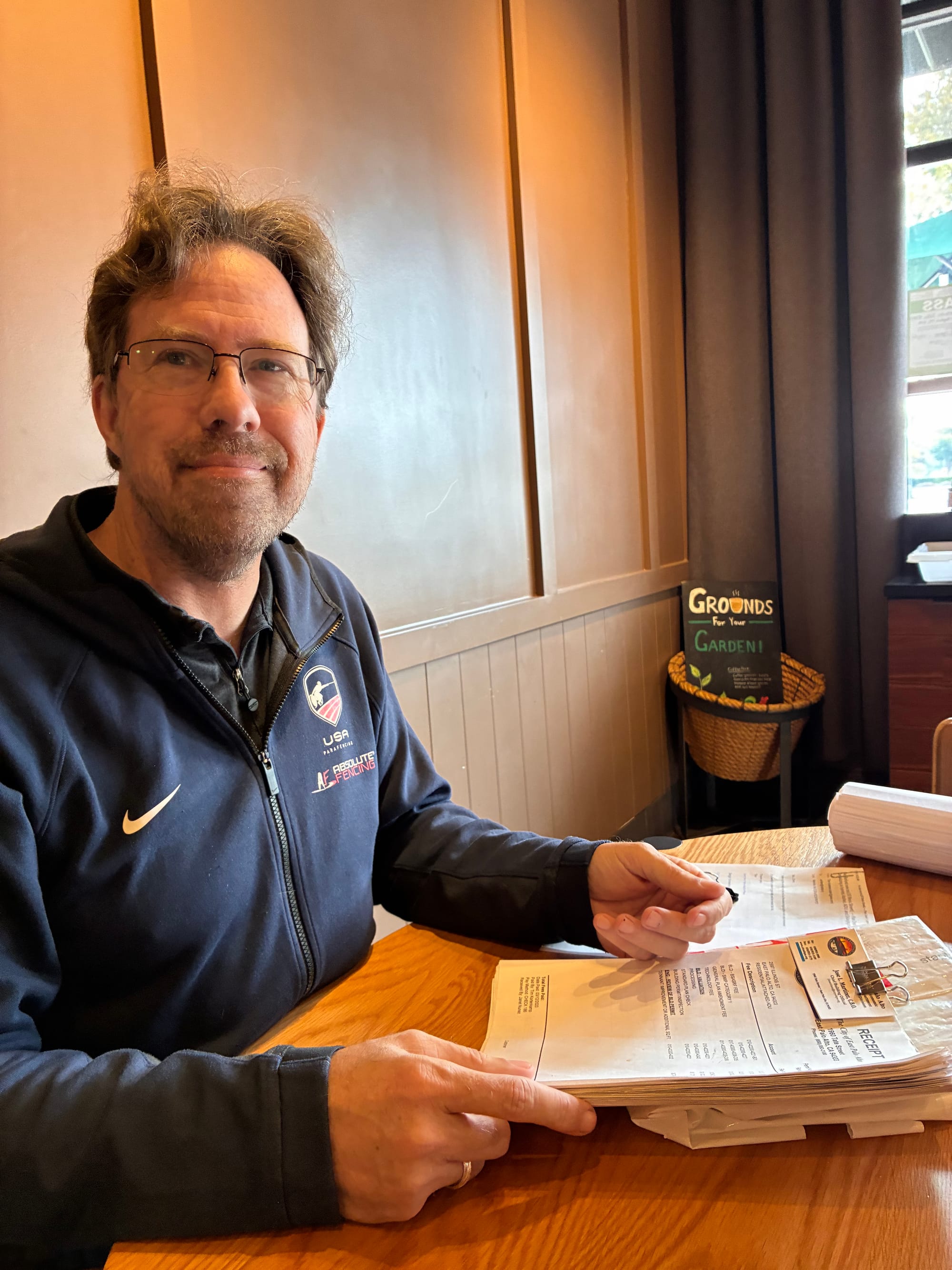
Instead of a clear path to compliance, Tim described an exhausting gauntlet of escalating fees, antiquated bureaucracy, and intimidation from our Building Department. In his words, the process was "not fair, not easy, and not transparent"—and felt more like a mob shakedown than dealing with a professional public agency.
How a Simple Upgrade Became a Financial Trap
What Tim and his wife encountered isn’t just red tape; it is a system actively working against homeowners who try to follow the rules:
- Whole-House Code Triggers: To get a permit for a single wheelchair-accessible bathroom, East Palo Alto demanded that the entire house be "re-permitted" and brought up to current building code. Meeting that demand would have cost upwards of $25,000 for an architect alone, before a single piece of tile was laid.
- Invasive Scope Creep: Beyond the bathroom itself, city staff demanded that the homeowners cut into an existing wall just to inspect electrical wiring.
- Outdated, Expensive Paperwork: In the heart of Silicon Valley, the city refused to accept electronic plans. Instead, Tim was required to submit triplicate copies printed on specialized paper by a professional printer—costing hundreds of dollars every time plans had to be submitted.
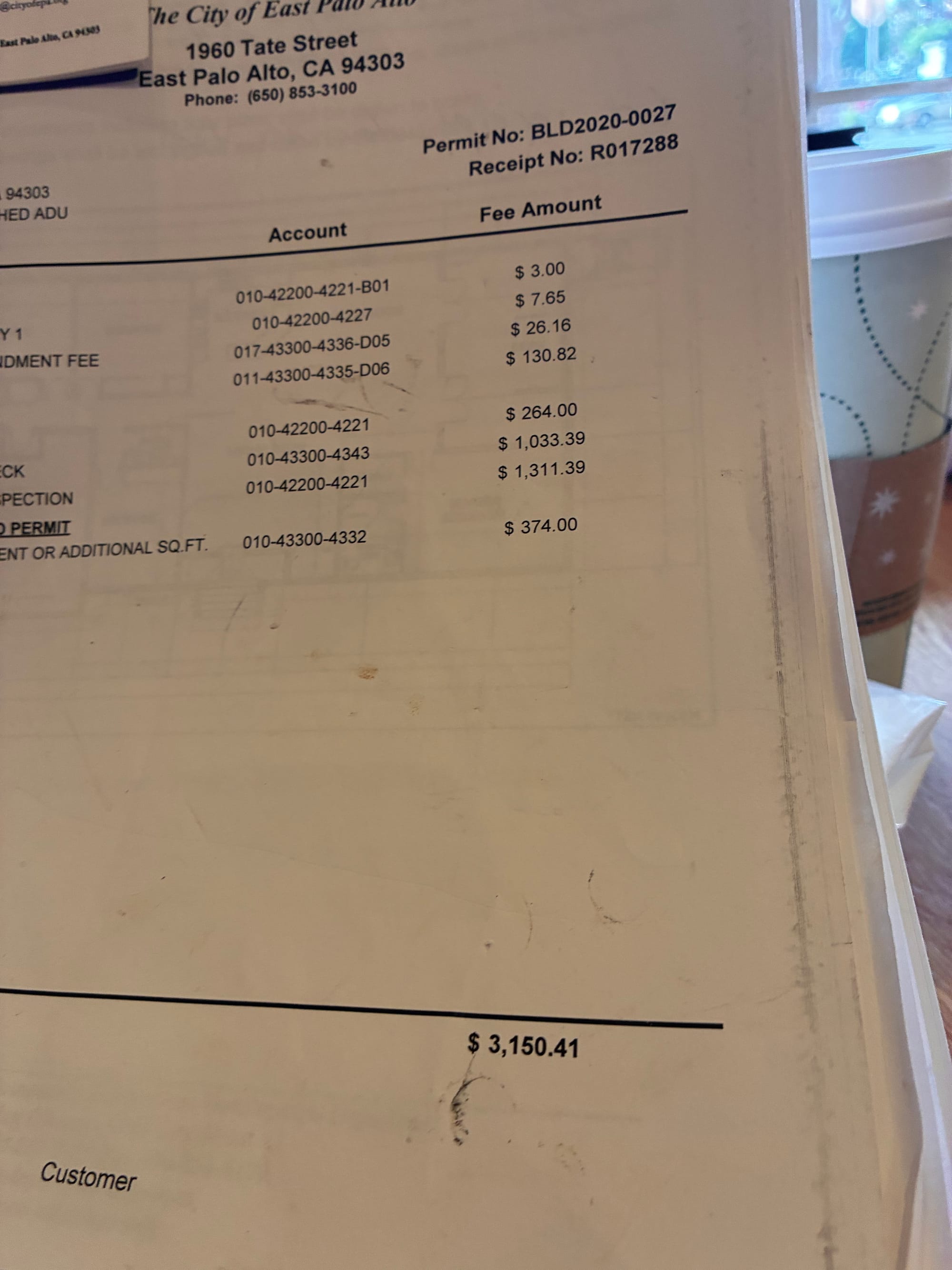
- Thousands Paid, Zero Permits Issued: At every turn, the department demanded more paperwork and more money. Tim and his wife have now paid more than $3,500 in city fees—and still do not have a single permit in hand.
- Intimidation Over Refunds: Perhaps most troubling of all, when Tim inquired about getting a refund for fees paid on a permit that was never issued, city staff threatened him with a full code inspection of his home.
When Compliance Becomes Impossible
Tim has an advanced education and every capability to navigate complex rules and regulations. He wanted to do this the right way, by the book. If someone with his skills and determination hits a brick wall trying to build an accessible bathroom, imagine what happens to seniors, working parents, or residents navigating the system in a second language.
When a city makes legal permitting prohibitively expensive, unpredictable, and punitive, it doesn't make housing safer. It punishes honest residents, traps families with disabilities in homes that don't serve them, and pushes homeowners away from pulling permits altogether.
A municipal building department exists to protect health and safety—not to drain working families dry or use code enforcement as a threat when residents ask for accountability.
What Permitting Reform in East Palo Alto Must Look Like
Tim isn’t asking for special favors. He is asking for a process that is fair, transparent, predictable, and logical. That shouldn't be too much to ask in East Palo Alto. To fix this broken system, our city needs concrete, immediate permitting reform:
- Modernize Submissions: Accept digital plans immediately and eliminate costly, wasteful requirements for professionally printed triplicate copies on specialized paper.
- Keep Code Requirements Proportional: End overbroad, whole-house re-permitting triggers and invasive wall tear-downs for targeted interior projects—and create a streamlined, common-sense pathway specifically for disability and accessibility modifications.
- Guarantee Fair Fees and Refunds: Publish clear, upfront fee schedules so residents aren't blindsided by hidden costs, and establish a straightforward refund policy when permits aren't issued—with strict protections against retaliatory inspections.
- Shift the Culture from Gatekeeping to Service: Measure our Building Department on clarity, responsiveness, and helping residents reach a safe "yes," rather than putting up roadblocks at every turn.
East Palo Alto is full of hardworking families who want to invest in their homes, take care of their loved ones, and follow the law. When a teacher and a mental health clinic administrator can’t get a permit for a wheelchair-accessible bathroom without facing tens of thousands of dollars in unnecessary costs and threats from City Hall, the problem isn't the homeowners—it’s the system.
The good news is that East Palo Alto now has a new Chief Building Official who is well aware of these failures and is actively taking steps to fix them. One of the very first things he pointed out upon arriving is a telling statistic: East Palo Alto issues only a fraction of the building permits that a city of our size normally would.
The reason isn't that residents aren't fixing up their homes. It’s that our tangled, punitive bureaucracy has convinced homeowners to bypass permitting altogether and just build without city oversight. When following the rules feels like a financial trap, people stop trying to follow them—which undermines both public safety and trust in local government.
It’s time to reform East Palo Alto’s permitting process so it finally works for the people who live here. If you’ve faced similar hurdles trying to permit a project in our city, speak up and share your story—real reform starts when we refuse to accept dysfunction as normal.